
News
23.04. - 31.05.2026 KAISU KOIVISTO & VINETA KAULACA "Between Reflections and Recollections"
23.04. - 31.05.2026
Galerija "Māksla XO"
Elizabetes iela 14, Rīga, LV 1010
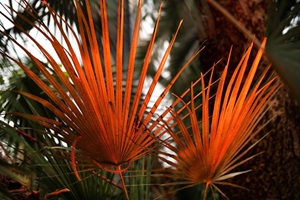
KAISU KOIVISTO and VINETA KAULACA
Between Reflections and Recollections
From 24 April to 31 May 2026, Māksla XO Gallery is pleased to present, as part of the current contemporary art programme in Latvia, a joint exhibition by two internationally recognised artists – Vineta Kaulača (Latvia) and Kaisu Koivisto (Finland), Between Reflections and Recollections – which bringing together painting, photography and sculpture, explores how human perception is formed and transformed under the influence of personal memory, collective experience and diverse cultural contexts.
Finnish photographer Kaisu Koivisto and Latvian painter Vineta Kaulača first met in 2004 during a Triangle Arts Association residency in New York, where the industrial environment of the DUMBO district and the view of the Brooklyn Bridge marked an important starting point for their creative dialogue. Since then, they have collaborated on several international projects, including the joint project Double Vision, which was exhibited at Galeriaia in Helsinki in autumn 2025. The exhibition on view in Riga continues this collaboration.
“Recurring themes in my lens-based works and sculptures are processes of constructing and deconstructing, juxtaposed with the regenerative patterns of growth and decay in the nature. The life cycles of materials, both their durability and their fragility, fascinate me. I regard materials as symbolically charged documents, which indicate and witness the passage of time, and the way in which things are valued is shifting constantly. I am interested in an ambivalent aesthetic: the simultaneity of the synthetic and the organic, light and darkness, stark geometry and the ornamental. In my digital and analogue photographic works I often blend several layers or multiple exposures. These methods shape the image in unforeseeable ways, creating a folded, prismatic image” – Kaisu Koivisto.
“I work on a range of topics that view space, spatial relations and time as dimensions that can be seen due to change, shift of perceptual focus, distance. My works aim at illustrating the ambiguity and relativity of perception. The way we look at the world builds up an image of the whole from different parts and fragments, based on our emotional relationships and intellectual experiences of any particular image. I am interested in investigating how reality is reconstructed from fleeting and fragmented visual impressions, highlighting the complex emotional and cognitive processes that shape how we see and remember. My practice seeks to make visible the subtle interplay between what is seen, what is remembered, and what is felt” – Vineta Kaulača.
The exhibition Between Reflections and Recollections explores the variability of perception, emphasising that it is never neutral – it is always shaped by context, associations, and the interplay between inner and outer worlds. What we see is continuously reconfigured and interpreted: through personal and collective memory, as well as through cultural environments. Perception shifts as it moves across different cultural, emotional and ideological layers, and it is precisely this multilayered nature that determines how we interpret images, space and ultimately ourselves.
A process-oriented approach is central to the practices of both artists. The image-making methods they employ – painting, mixed media, photography and sculpture – underscore that what we perceive is not reality itself, but rather a constructed and stratified representation of it. Transformation and deformation are not treated as errors, but as creative impulses that reveal otherwise unseen dimensions of reality.
A key aspect of the exhibition is the principle of collaboration – the perspectives of both artists are deliberately interwoven, forming a dynamic dialogue. In her photographs and sculptures, Kaisu Koivisto approaches materials such as steel, mirrors, stone and horsehair as mutable cultural and emotional systems in constant transformation. Meanwhile, working primarily in painting, Vineta Kaulača focuses on the subtle interplay between perception, memory and experience.
By bringing together different media, the exhibition develops a complementary visual language in which colour, form, material and spatial relationships are interwoven into a unified dialogue. It creates a multilayered experience that reveals the uncertainty and mutability of seeing.
Kaisu Koivisto (1962, Helsinki, Finland) is a multidisciplinary artist working with installation, photography, sculpture and video. She holds a Master’s degree from the University of Art and Design Helsinki. At the core of Koivisto’s artistic practice are questions of place, landscape and history, with a particular focus on how environments are represented, interpreted and utilised. Her work interweaves the relationship between nature and technology, as well as human attempts to understand and control natural processes. The artist’s research is rooted in the landscapes and political contexts of the Nordic region, including the exploration of abandoned military territories in Eastern Europe.
In her recent projects, Koivisto has addressed themes of climate change and urbanisation, for example the transformations of Nuuk, the capital of Greenland, in the series Conversations with Ice and Soft Ice (2025). Her work has been exhibited internationally at major institutions, including the Museo Reina Sofía (Madrid, Spain), MoMA PS1 (New York, USA), Museo Hendrik Christian Andersen (Rome, Italy), Tokyo Metropolitan Museum (Tokyo, Japan), Galleria Sculptor (Helsinki, Finland), as well as within the framework of the Venice Biennale. In Latvia, Koivisto’s work was shown in 2019 in the exhibition Displacements / Between Memory and Imagination at the Rothko Museum in Daugavpils and Art Station Dubulti.
The artist’s works are included in more than 20 public collections, including Kiasma Museum of Contemporary Art (Helsinki, Finland), EMMA – Espoo Museum of Modern Art (Espoo, Finland), Pori Art Museum (Pori, Finland), Tampere Art Museum (Tampere, Finland), Turku Art Museum (Turku, Finland), Wäinö Aaltonen Museum (Turku, Finland), Amos Rex (Helsinki, Finland), Kumu Art Museum (Tallinn, Estonia), Rothko Museum (Daugavpils, Latvia), and the Nordic Watercolour Museum (Skärhamn, Sweden).
Vineta Kaulača (1971, Riga, Latvia) explores the multilayered and relative nature of perception in her painting practice – how we construct our understanding of the world from fragmentary experience shaped by both emotional and intellectual factors. She holds a Master’s degree from the Art Academy of Latvia and has studied at Humboldt State University in the USA and the Berlin University of the Arts. Kaulača’s work is characterized by a sustained interest in the processes of image perception, the relationship between movement and time, and embodied experience.
Her work has been exhibited at internationally significant institutions, including the Irish Museum of Modern Art (Dublin, Ireland), Palazzo delle Esposizioni (Rome, Italy), and Camden Art Centre (London, United Kingdom), as well as in exhibition spaces in Shanghai and Abu Dhabi. She has been nominated for the prestigious Purvītis Prize and has received several international awards and grants, including the Centre–Periphery Award (Federculture Italia), as well as grants from the Irish Museum of Modern Art and Arts Council England.
Kaulača’s works are held in major public and private collections, including the Latvian National Museum of Art (Riga, Latvia), the European Parliament Collection (Brussels, Belgium), the Art in Embassies Collection (USA), the Federculture Collection (Rome, Italy), the Imago Mundi – Luciano Benetton Collection (Treviso, Italy), the Zuzāns Collection (Zuzeum Art Museum, Riga, Latvia), as well as the SEB Bank Collection (Riga, Latvia), the ABLV Bank Contemporary Art Collection (Riga, Latvia), the Swedbank Contemporary Art Collection (Riga, Latvia), and the Luminor Bank Collection (Riga, Latvia).